Ep 23 - Aleksandrina Ikonomova - Exited Founder & Angel Investor

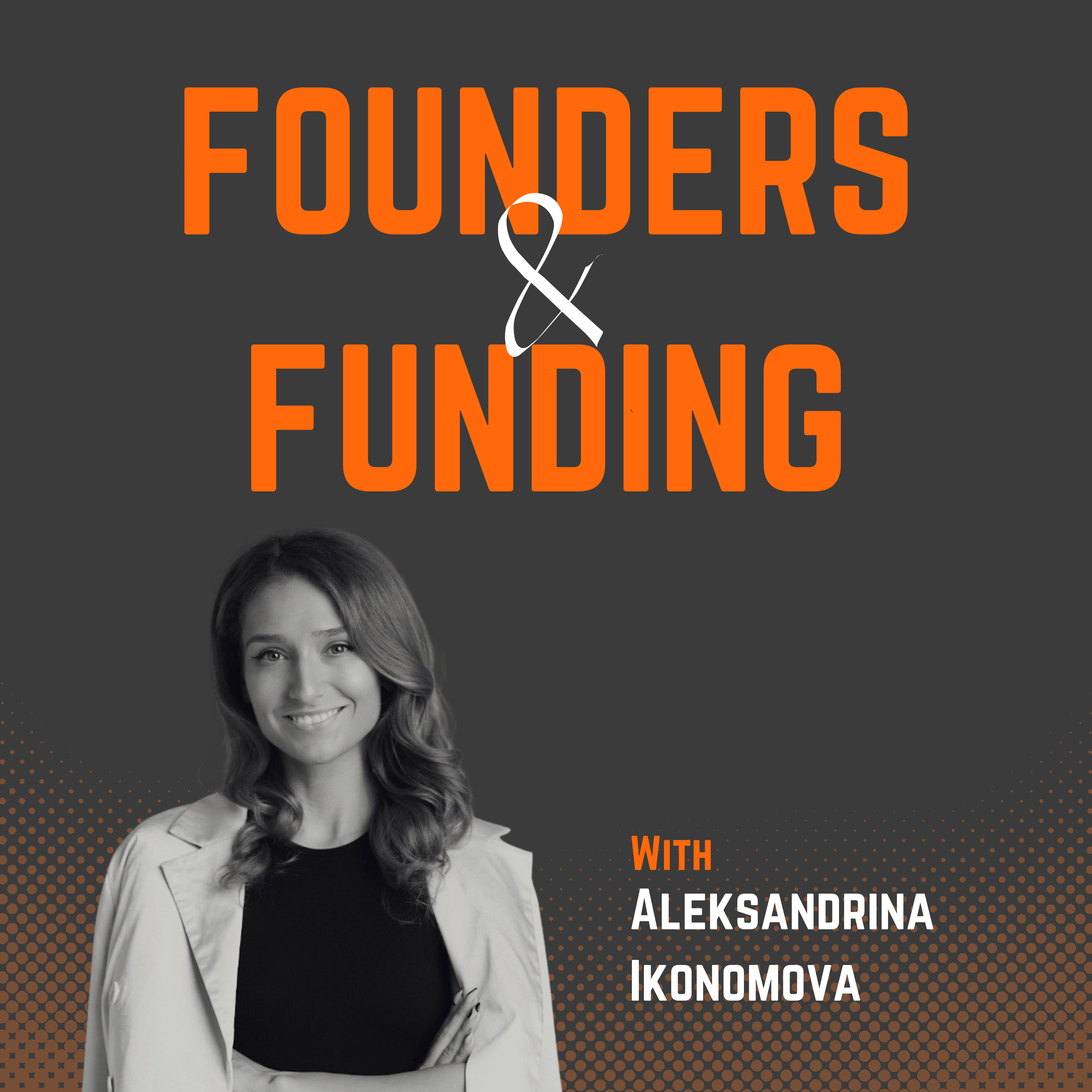
In this episode of the Founders & Funding Podcast, Philip speaks with Aleksandrina Ikonomova, exited founder, startup mentor and angel investor.
Aleksandrina brings a rare combination of perspectives to the conversation, she has built and exited her own companies, works with VC portfolio startups on turning around underperformance, and invests her own capital into early stage founders. She shares what she really looks for when investing, why the best founders are defined by their relationship with the problem they are solving, and what it actually takes to survive the emotional and operational demands of building a startup. They also discuss when fundraising makes sense and when it doesn't, why being coachable is not always the compliment people think it is, and what ruthless execution really looks like in practice.
0:01 Hi, welcome to the Founders and funding podcast. I'm your host, Philip Smith. On the podcast, I'll be interviewing founders, investors, startup advisors on how to fund the journey of your startup and some tips and advice they have for you along the way. This podcast is sponsored by Perfect Technologies and Laden. Enjoy the episode. Hi Alia, welcome to the Founders and Funding podcasts. Hi there, thanks for having me. It's my pleasure to have you on, Arlie. Just to kick us off, could you tell me a bit about your company and your role? Yes. So currently I work with Bisana Labs, which is an agency operators agency that works with VC portfolio companies on their underperformance or to say and we go in, help them with operations, improve their metrics and either prep them for the next fundraise or we prepare them for an acquisition. So my partner has been in M&A specifically for SAS Technology over 20 years and I myself am an exit founder and this is pretty much what we do at the moment.
1:10 And I also enjoy invest on the side in some of the companies. Fantastic. And what does an average day look like right now? It's a very interesting question. When you work with start-ups, there's rarely average anything. But usually because with the start-ups, we work on a weekly, monthly and quarterly basis. So Mondays and Wednesdays are for strategies. So we analyze what we've done during the week and because we have big batches of start-ups, so we have to divide it, one at the beginning, one in the middle of the week. So we sit down, we look at the experiments that we've mapped, we look at the results and we decide whether to continue, what have we learned? Is there anything to put in our playbooks or is it something that we have to adjust to move faster, etcetera. Then we look at how the tools are performing, is everything working OK, what decisions were made during the week, etcetera. Then on the rest of the day, so it really depends. It's just putting fires down, talking to Obcs, fixing juice and things like that.
2:17 So it really depends on the day. But as a person, on a personal note, since I have to be very focused and agile, but I'm the network a lot, I wake up on my own very early. So six, I'm already up whether I've went to bed in the next the previous evening at 2:00 AM. So my my internal watch is already waking me up at 6:00. I have a very strict morning routine when it comes to just getting in in the right headspace. So I usually meditate, breath work, writing down thoughts, ideas, anything and then just sit down look at the tasks for the day.
2:58 I'm I'm notion obsessed person so I have everything in notion. Everything is tracked hour by hour, everything is written down. Everything is whatever I can have automated with Co work, of course. And yeah, just hands down working until I want to say 678 depending on the day. Because most of the days I also have a lot of networking events that I have to go to. Not have to, but usually want to because that's where we meet with other founders, other Angel investors and other VCs and come back home, work a little bit more and go to bed and repeat.
3:39 Well, it sounds like a really good routine for success and certainly working for you and and you're certainly working a lot of different, different areas. And so I suppose talking about some of these startups that you've invested in and why were they the right choice to invest in? Umm. So I, I've just just to give you a little bit of context. So I have been an entrepreneur for seven years now. I've done multiple companies in different industries. Some were very successful, some not so much. And I exited last year. My biggest exit was last year. And that's when I decided to give back to the community by investing a little bit. I do smaller checks up to 10K and I do early stage, so there needs to be some kind of attraction or at least very clear signal why the founder thinks it's worth pursuing that problem or solution and why they want to dedicate the next 20 years of their life in that specific area. Because it's becoming very popular and modern to become an entrepreneur, to fundraise, get in that. I would say a rat race.
4:51 It could be sometimes without giving, like having a clear thought process. Why would I do that? So for me, it's quite important to of course, to see that the founder really has, I wouldn't say passion is the right word, but is really irritated with the problem. Like they really are pissed off. Excuse my language with the problem or with how things are, and usually it's tied to a personal story. No, I, I was a bad founder because I was easily distracted by by the next interesting idea, next interesting problem, etcetera. I'm just very good at operations and say, oh, so that's that's why I managed to sell a company. But the best founders I see, regardless if I invest in them or not, are people who could very clearly describe me, the relationship they have with that problem, if I could say so. And then it's of course an operational level. So seeing if the founder can manage their own gals, can they properly manage themselves, their emotions? Because it's a very emotional ride. And it's very difficult to predict whether they will be able to do that when times get calmer because a lot of founders naturally thrive in gals.
6:13 But when things get calmer, they tend to create that kills themselves. So it's an interesting aspect of it, but that's usually the job of the later stage investors to figure out how to navigate that situation. So yeah, that would be that way. Pretty much it. How they execute, how they learn, how quickly they fail, test, experiment, do things and what is their relationship with the problem? Yeah, I know. Certainly I think from the sit ups I've worked with, I've always seen the ones that have a bigger problem to solve and ones that have really experienced the problem or obsessive or fixing this and they're the ones that are going to be successful and small problems don't result in in companies wanting to to pay to solve them. In terms of those those companies, the startups you've invested in early, do you have any examples? Is there a company or two you could talk about that you've invested in as examples?
7:07 Yes. Umm, well, I haven't asked for permission to specifically speak about them publicly, but I can give an example of a company that for me executed very well. So one of the they have they had to change their ICP dramatically because they like they had like very long sales cycles. It was B to BAI software that replaced a certain workflow, but it didn't. So it did solve the problem for the I, the first ICP that they went after. But the problem was that there were so much, so many COM competitors there. It was so difficult to the decision maker. The decision maker is very different from the user, so 3-4 steps ahead.
7:59 So usually they weren't as embedded in the industry as they would have have to in order to succeed. They did have a one or two big clients, which was a great success, but that wasn't enough for them to be able to move as quickly as it's needed at this stage. So we sat down. It's a company that I've also worked with. We sat down and we assessed that and we had to dramatically change the ICP and the propositioning and the way they marketed themselves, the way they approached their ICP, etcetera, which could be very uncomfortable when you're like the early stages and they did.
8:45 And at the beginning the results. So it was easier to get to the ICP. The calls were much more frequent. They received feedback much quicker, which was very important in terms of product building because with the big companies that wasn't the case, but the revenue was slower because they had to change their pricing as well, much slower. But in the long run, that was the right decision. And doing something like that requires a lot of self trust and a lot of like willingness to solve the problem regardless by anything. So that's for me is a brilliant example of someone who looked at the long term game instead of just, you know, because a lot of founders just go for a certain market because they think that would sound more interesting to an investor instead of thinking, OK, how can I improve my metrics? How can I improve my nostal metric? How can I improve cash flow instead of just thinking, OK, what would sound great to an investor so they can invest in me?
9:43 So that's that's a great example for me for a brilliant founder. It certainly is. And what is the best way to fund a startup's journey? So in terms of do you think it's better to start bootstrapping or to start trying to get into investment? Or is there a preferred path you think that that works for startups? I don't think there's a straightforward way for every startup. So it really depends on the industry, on the capabilities, on the level of experience of the founder. Now it's becoming more more easier to build things and test things. So what what was used to consider pre seed is no longer valid. So you cannot just go with an idea unless you're like for Timex the founder, that's that's different ball game. But you have to have like a very solid proof that you know what you're doing, or at least you have some kind of a very strong signal that it makes sense to, to, to build this. And again, it really depends on the, on the, on the industry and it really depends on the country as well. So for me, when I moved to the UK, I've, I realized like how easy it is to get UK grants, which was shocking to me. I'm coming from Eastern Europe, I'm Bulgarian. So the government doesn't take care of you as much. It's all grind, make money and then figure it out and then even try to fundraise because the VCs there are not as risk takers as they are in the UK.
11:10 In Europe general, we have a problem with that anyways. So it really depends where you are, what you're building, how quickly can you prove that the problem is relevant to a bigger market, how how quickly you can embed yourself in the market. All these factors come into play. And I don't think every startup should fundraise. I don't think everyone is solving such a big core, significant problem for the world that it requires A fundraising, I think. And not every nervous system is built for fundraising as well, because when you fundraise, this means that you have to put up with investors who are not always the easiest people to put up with.
11:55 They're very demanding. They require very high level of agency, very high level of execution, very high level of sometimes investors don't know that what they're saying, what they're doing either. So you have to be like very sure of yourself that you are the best person to make a final call. So it really have to has to do also with are you capable of, of dealing with all that? Because it's very, very difficult journey. Yeah. And that leads me to the next question of do you think who the founders are, what, what skills they possess that impacts if you should invest or what the kind of investment they should get. So if you find that there were technical founders, if they don't have those kind of technical skills, maybe the more sales focused because that impacts if they should fundraise or not.
12:48 That again, depends on the business. So whether or not you should fundraise depends on is your business investable? Do you really want to go that route? And it doesn't matter if you're technical or not, if you have been 20 years incorporate or not, it really doesn't matter as long as you understand the game that you're playing. And the game is much bigger than just fundraising for your startups because I'd, I, I don't see enough entrepreneurs understanding that it's a, just a huge vehicle. What I mean by that is that you fundraise from your VCs, but your VCs fundraise from LP.
13:28 So those returns are expected for too many, from too many people. So you really have to understand that you're getting yourself into a system that requires a certain level of execution speed and people will push you and pull you in different directions. And you have to be very stable and sure of yourself in order to, to be able to, to play that game while building a company. Because at some point even on, especially on the later stages becomes a lot about politics, especially in Europe. So you see like the best founders that have fundraise that are coming from Europe, they're a little bit I would say they, they know how to set boundaries very clearly.
14:14 So I have, for example, I don't like the term coachable founder. For me, that's a really bad thing because that means that he'll listen to everything everyone has to say. And this is not a good thing for someone who is leading Unicorn, let's say. So for me, the founder has to be, to some extent, I would say agreeable. Easy to work with, yes, but not coachable because I like founders who tell me you're not right because this, this and that. And they know that like that chosen, they know what they're doing and they have trust in their own discernment. Although you never know what you're doing actually with the startup, do you?
14:57 That's a good point. And how can companies attract investors effectively? By building a successful business. So if you, so if you have traction, that could be revenue or not, depending again on the business and the business model. If you're building something meaningful, people would like to invest in you. If you're if you're sure about what you're doing, if you're confident about what you're doing, even if you don't know what you're doing, people will want to invest in you. So of course there are strategies of to prepare a good data room, to clean it properly, to organize everything, have an eye to the detail, be a great leader, create the formal effect. So fundraising should happen for me in 2 to 3-4 months maximum. If you've done the work and you should prepare like it's a marathon and you should have someone that would be like your Co founder essentially would be running the business while you go out and fundraise because it's a full time job. But attracting the right investors is it starts with like, talk to them before even opening the round. First of all, they can give you some good advice on how to improve your metrics or what they would like to see. Because after all, they've seen a lot and they know how the industry is changing, what's moving, what's not. Talk to as many people as possible. Spread the word that you're soon to be opening a fundraiser. Make sure your business is having the traction that it requires to to have attraction
16:29 in order to be fundable and investable. Build everything systematically. Build like a good data room. Show that you're someone who understands all the aspects because as soon as you fundraise, your business goes to the next level. It cannot be as scrappy as it was in your, you know, 2 bedroom apartment where you have 6 people together. In order to build the company, it just requires a different type of decision making process. It has to be like a little bit more sophisticated than that. So make sure you have all those points together and then create the formal, so-called formal which usually happens when you close like your lead and after that go after the the smaller funds or the angels etcetera. I see that Angel investments are also changing. So less and less angels are willing to put the first check before you have even built anything. So idea based checks are more rare. They kind of come in with with the seed receipt funds together. So have at least one fund and build a relationship beforehand. And that's really great advice.
17:44 I'd finish up if you'd one key piece of advice to share and fund in a startup, what would it be? One key piece of advice. That's a very difficult question for your data. Make sure you know what is working, what you're working on, why is it working or why it's not working, and be ruthless in executing based on the information that you're gathering. And that that's how you build intuition because there are a lot of people are saying that founders know best date because they have intuition, but intuition is also memory.
18:25 So you expression gets better with more with the more information that you get. So try to follow key, all the key metrics. Why something is working when it why not be very, very, very honest with yourself. So a good example I can give is like founders love talking to people and that that that doesn't mean that those people are your ICP. So be very ruthless and saying like, is this person actually a buyer or a good partner for my business or am I just spending time talking to them because it feels productive when in fact I'm just being busy. So be absolutely ruthless in being clear on the metrics that matter. Follow them relentlessly.
19:09 Have a system based on which you assess. What have I done? Is it working? Is it not? If it's not, why is it not working or why is it working? And what's the next step to build upon on that and keep track of all that? Because this is this compound effect at the end of the day will help you not repeat and go in circles with the same decisions and same same mistakes. That's really great advice to finish on. Alia, thanks so much for coming on the podcast. I think you shared a lot of really great advice, some of which a lot of which I haven't heard before. So I think there'll be a lot for for founders and investors to take away from the conversation. Maurice, thanks for having me and happy to help. Thanks, Alia.
19:55 Hi, Thanks for listening to this week's episode of the Founders and Funding podcast. If you'd like to be a guest or have a guest suggestion, please get in touch. Thank you.