Ep 22 - Niall Moran - Fractional CTO & Startup Advisor

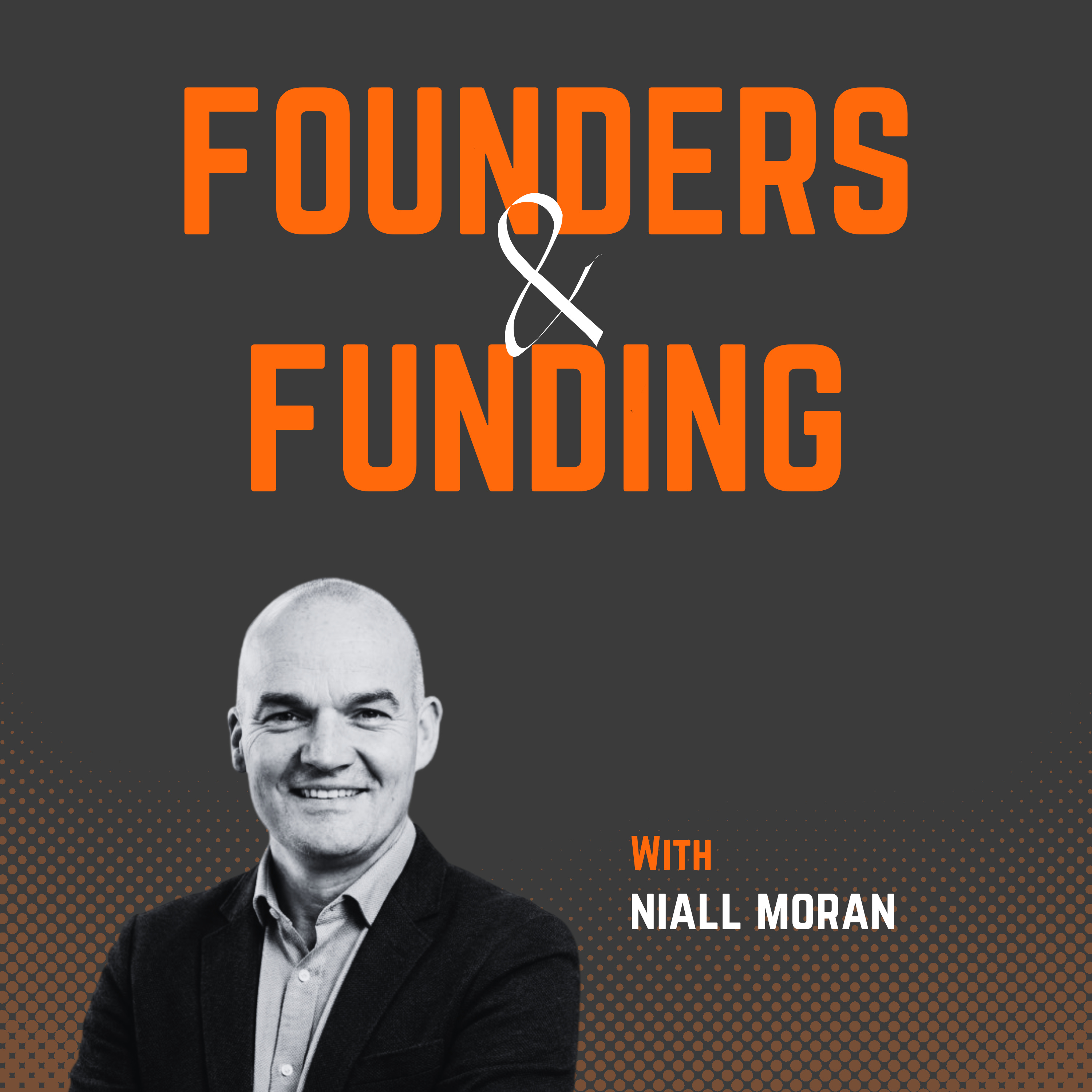
In this episode of the Founders & Funding Podcast, Philip Smith speaks with Niall Moran, Fractional CTO and Startup Advisor.
Niall brings over 20 years of experience across software development, go-to-market strategy, and startup advisory, having worked with the likes of Google and Microsoft before going out on his own. He shares what it really looks like to build in the age of AI, why defensibility has completely changed for startups, and the most common mistakes he sees founders make when taking an MVP to market. They also discuss why getting sticky customers matters more than revenue or funding right now, and what technical due diligence actually means for an early stage startup.
0:01 Hi, welcome to the Founders and Funding podcast. I'm your host, Philip Smith. On the podcast, I'll be interviewing founders, investors, startup advisors on how to fund the journey of your startup and some tips and advice they have for you along the way. This podcast is sponsored by Perfect Technologies and Laden. Enjoy the episode. Hi, Niall, welcome to the Founders and Funding podcast. Hi. Phil, thanks for having me. Well, look, thank you for taking the time for coming on. I know you're very busy. And now to kick us off, could you tell me a bit about yourself as your background? Sure. So I'm in the IT industry quite a while, 20 plus years. I describe myself as a builder at heart. So I spent most of my career building software applications, building solutions for customers, always kind of customer facing across multiple industries, every industry that's out there from public sector to pharma. So yeah, I described myself as a builder builder at heart. I spent a lot of time building applications. I've also spent a lot of time on the go to market side and strategy side with Google and and Microsoft. So I, I feel I have that kind of mix of, you know, technical builder architecture, but also on the kind of strategy and go to market side.
1:23 So that's that's me, yeah. Hmm, Well, it's a great combination. You know, most people are the kind of leaning very heavily into the tech side or the go to market side. But I think it really is valuable to learn even at a height level as much as you can about how the other side operates and communicate them. And so well done, I suppose working as great companies, having a great career gives you the opportunity to do that and talk to me a bit more about what you're working on now with the Sidekick CTO. Sure. You know, I, last November I left Google, I finished with Google and I decided I was at a, at a, at the point of my career where I wanted to try and do something myself, go out, go out on my own. And again, leaning back into that, you know, builder mentality, the, the kind of tech stuff I've done over the years mixed with the kind of strategy piece. I said, you know, this would be kind of a, you know, an interesting time to, to get back into my startup stuff. I was a CTO of a startup in the past. I was working for an, an agent investment group and I really loved startup.
2:28 So I think the, the hustle, you know, the, the builder mentality to get it done at all costs really kind of aligned with where I like to work or where I get energy. And I'd never really done it out on my own as a consultant, as a freelance consultant. So I decided to not give that a go, you know, and that's where Sidekick CTO came from, right? So I spend my time either advising startups at a very high level or getting really deep into the technology for for some, I joined tech operators there recently so that, you know, get back into the Angel investment piece of advisory piece and it's going great. I'm busy.
3:12 I'm probably a little bit too busy, right? It is a good problem to have. I think that the scene has changed significantly in terms of the AI piece. And I know, you know, I'd love to talk about that as well, but you know, so it's a really exciting time. And I think, you know, Dublin, Ireland has always been a kind of a hotbed of activity for the perspective of startups. And, and you know, I'm delighted to get back into it. And I, and I've kind of built some, some of my own projects as well, Pulse IQ dot fit as a kind of fitness AI, kind of AI coaching fitness platform and that I've built myself.
3:53 So, you know, really excited to get back, get back into it. Fantastic. Well, it's, it's great. We'll see. It's good to be, you know, I suppose, you know, really unique, but great. You are in position where you're on that the technical builder side and you can advise tariffs, but also develop new setups, but also get into the investment, uh, part of it as well. And see, I know you mentioned there. So you were the CTO and startup advisor for the Lucy Fund? That's right. Yeah. Going back, going back quite a while. So, you know, so that was a great one because it was it was a mix of building products and scaling products. And at that time, by the way, we didn't have AI doing everything for us, right? We had to, we had to do the hard work ourselves. We didn't even have, you know, cloud hosting really AWS were was just kind of getting going.
4:37 And so that was a great time as well because cloud was the big thing and and then, you know, as well as building the actual platform, we were we were kind of investing in other companies, yeah, through our kind of technical delivery model. So that was really exciting. So I, I got a really broadview of what's a good idea, what's a bad idea, how to, you know, on the execution side, then what? What's a good idea and what's a bad idea from an execution perspective. So yeah, I really enjoy that work and glad to, as I say, glad to be glad to be doing it again. I'm busy. Yeah, absolutely. And I suppose to put it back to the present a bit, what What does an average day look like right now? Right now I'm, you know, knee deep building a platform with a company called better futures, really exciting product sets. Of course it's AI, but it's AI in a very specific space where you know, in, in the engineering world and mechanical engineering world where it's very document centric, very regulatory environments as well.
5:45 So it's, it's, it's hard to kind of, you know, replace the engineering knowledge that's there. So in fact, it's impossible and we shouldn't be doing that, right? Because the, the, the, the kind of level of detail we're talking about. So it's, it's, it's really about assisting engineers, taking them away from paperwork and getting them doing more of the innovative work that's required from engineers across all sorts of products. So better futures as a company, better futures at AI, uh, knee deep building that platform and getting it out there. We've got customers on boarding right now. It's it's so it's a very exciting time and I'm loving it. Fantastic.
6:26 I'll be sure to check that out. And I suppose to talk then a bit more about AI. How? How has AI changed the way you work? So it's this isn't, there's two ways we're going to answer that question, right? One, is it kind of a chronological view? Because if you had asked me that question three months ago, it'll probably give me a different answer. Yeah, that's because it hasn't changed how we're working. It's it's, you know, it's going to sound like a bit of a marketing tagline, but it's completely transformed how we're working. You know, I see right now there, there are a lot of metrics we use to kind of gauge developer success, but I think percentage of lines of code written with written manually is a big one.
7:08 And you know, how much of your code has been written by AI. Is, is, is really important to me right now, just from the perspective of similar to the example I just gave of the Mechanical Engineers, right? I, I want engineers focused on innovation and that means solving problems in new ways. And I don't necessarily want them writing code, you know, and they're two distinct things. I think the world is focused very much on AI writing code, which means we don't need engineers anymore. And that's just not true. We need engineers because they're the creativity around the applications and around the products that we build.
7:51 AI has very much transformed how we do that and how we accelerate. So what we can do now with a few people, you know, when I was doing the work we talked about, you know, 12 years ago, it was a team of 40 people. Right now it's a team of three or four people. And that is a real difference. And that means we can do more with that forty person team, right? It means we can, we can scale quicker, we can we can accelerate into new markets quicker. So it's, it's definitely transformed what we do and primarily in the area of, you know, AI coding and also, you know, documentation. I mentioned the documentation use case there earlier on. Like a lot of the work that an engineer would be, you know, doing a software engineer would be doing is kind of documenting what they're doing, making sure everything is well documented. And, and anybody who's been around for a while knows that documentation is only as good as how up to date it is, right? If it's even a few days out of date, it's useless because it could send people in the wrong direction. So using AI to, you know, keep our documentation up to date is a really great use case for it as well. And it all just points towards allowing developers or engineers to focus on engineering rather than writing code. Yeah.
9:11 Yeah, I really like that. It's like there's pros and cons. I absolutely. And it's you know, like if if you if people are listeners or many of them are will be are familiar with loverball. Those are the types of platforms you can get AI to write code, but you know, you need the you certainly need the the engineers, the developers there to really problem solve and make it a product and something that people actually want to use. So there's always going to be a huge need for that and get that. I think getting that combination that makes right as you described there is, is what's important. And talk to me a bit about defensibility. Uh, now I know we, we've had past conversations about that, you know, you know, and why is that important? Well, defensibility is always important for a start up so that you know, they could when when they launched their company. It's not, it's not easily reproduced. That's the key thing.
10:02 And but I think what's interesting about defensibility right now is, and a lot of the rules around this are the same. They've always been the same. You know, an idea is not enough. It's all about the execution. For example, a lot of great ideas out there, but you know, it's not a, you know, we've got to get them executed. So but, but defensibility used, it used to be enough maybe to build an application, you know, and spend time building it, a complex application, you know, software solution of some sort and get it out to market. And straight away you had a lead of months to years on any competition that wanted to get into that market. And you mentioned products like Lovable, you know, so now that changes the game because people can, CE OS can, and I'm not advocating for this, but CE OS can build their own applications. Certainly MVPS with Lovable and Repple and others, OK, it's not just Lovable and get them out to market right, with, you know, fully functioning MVPS.
11:06 So where's the defensibility then? If if I go and I try and pitch this to somebody and they can reproduce it as quickly as I built it, my defensibility has got to be something else. So I think defensibility for me now is got to be around sticky customers, whether it's a user base community or, you know, enterprise customers. Are they sticky? Do they need to use your product? Because you know, they've been using it and then you've got the data and you know, you're, you're, you know, the, the value in them using your product is the fact that they're using their product, your product, right? That it grows over time and it learns from the customer and that creates a sticky product. And so it doesn't matter that the product could be reproduced relatively quickly, attracting customers, getting them on boarded and making them sticky is still the hard work.
11:56 And that's the execution piece that's really important. So yeah, ability, forget about it. If you're spending, you know, time figuring out how do I build a better LLM than, you know, I don't know, Google's right then, or how do I build a better model for this particular industry? You know, I'd be careful because, you know, it could be done And let's, let's focus on, let's get something out there. Let's get customers and, you know, let's get them sticky. And honestly, you know, maybe some of the venture capitalists might not agree with me on this, but I think it's more important than revenue or funding right now. You know, get something, get it out there, get people using it, Figure out what works, figure out what doesn't work.
12:41 Figure out how your product can, you know, adapt to those users so that they become sticky. And now you've got some defensibility that you can go and look for customers to pay you with or go look for collab funding. Yeah, I know I think you're spot on. You know, I do see even off for myself, I see founders kind of be trying to create AI. Suppose a defensibility or a thesis around why their new application is is great and it'll be the one that'll solve this problem. But you know, because the, you know, large because of AI, because things are moving so fast now, people can create products so quickly. And it really is that product market fit and getting customers and make and, and, and making sure that actually are retained and sticky that, that that's really the, the kind of the only defensible, I think, proposition now, because everything else can be, uh, replaced it on so fast.
13:32 And I suppose a bit broader than looking at some of the, you know, from the founders you've worked with neither there's some kind of common MVP challenges you you've seen them encounter. Yeah, and a lot of the, a lot of the challenges are age-old challenges. So you know, there's a danger and getting caught up in some of them when other things are moving so quickly. And you know, there's a few here, but I'm going to pick the top ones, top of mind ones. The first one is are you building a product or are you building a solution, right? What's the difference? You know, you can spend a lot of cycles with customers building a solution for them, but it's not a product you're building.
14:13 You know, it's kind of, I always use the analogy of, you know, we're building. If I build you a tailor made kit car just for Philip Smith's, you know, demands you want to the particular color, it was a look a certain way, you're going to love it. It's going to be great. But that doesn't give you product market fit because not everybody wants that car. All of a sudden you got to think about the production line and what you get at the end of the day then isn't that nice shiny product, you know, custom car. It's it's just got it right. Or Volkswagen is going to be for the masses. It's a scale issue. And I see a lot of customer, a lot of startups are actually, you know, they're trying to get customers and are trying to get, you know, which is great, but they end up building the solution for that customer and not actually a product.
14:56 And the shift away from building something for one customer to a product mindset can be quite seismic. And that's, that's the biggest mistake I see from a, you know, from a CTO perspective is how do we now shift to a, to a product mindset? And that's a whole different world. Think production lines, you know, a, a, a, a kind of a, a, a set of features that we think the masters will like, but maybe one or two customers won't like. And that's fine, right? The other one, I think that the other big one I'm saying right now is the, you know, we talked about it, the AI store, fright, AI generated apps. I think honestly, there's going to be a graveyard of these things in time to come. You know, there's so much more to building a platform or building a product and than just generating an app, right? You got to think about security, scalability. I literally saw on LinkedIn the other day an article about somebody who used who had launched an app that they had built with a tool like some of the ones we've mentioned, and they managed to delete their entire database with an agent. And this stuff is going to happen, right? It's going to happen and the, the, the, the question is, have you got a disaster recovery plan? Have you got a security plan?
16:18 Have you got the prevention plan to stop this stuff happening? That's what engineering a product is about, not coding. And that's my fear that a lot of startups are and look rightly so get an MVP out there, get customers using a get feed, but it's an MVP. Turning that into a product is a is a different, a different story. And then then there's a kind of other end of the spectrum where I still see startups going and offshoring an MVP development. And I'm like, you don't need to do that anymore, right? You can do that yourself, OK? Or you can get help from people like me who can build it in days and start getting customers on board. I think that the biggest piece of advice I've given the MVP stuff specifically is, you know, build it quickly, but no, it's an MVP and no, it's a prototype.
17:08 No, that getting that to scale and turning that into a product with properly production, proper production line behind it is a different story. And you probably need to start thinking about that early as well. And so that you don't end up in that graveyard that I that I mentioned. Yeah, I think there's a good points like I've certainly seen this does the, the new issues being created by as as much as it's solving, uh, you know, problems is creating a lot of a lot of problems as well. Like I see a lot of founders that they're adding because they can these add new features, you know, and they end up having 1020 features and, you know, without solving the core problem just because they can. So they're kind of going into future overload and we're getting too excited and they're not just kind of pulling it back.
17:51 We're finding and trying to match the problem with the solution and to limited feature set. But umm, yeah, it's, it's certainly an exciting and interesting space and changing all the time. Uh, before we finish, Niall, what is one key piece of advice you'd have to successfully fund a startup in terms of, you know, trying to help start-ups funding that journey, uh, and how they can kind of keep the setup alive to get it to that point where they can find that product market fit. Yeah. I mean, I will always go back to technical due diligence. You know, we just discussed it, right? It's, it's, it's, you know, make sure what you're building is ready for scale. You know, I talk to, I talk to founders, for example, who rightly so are being pushed by their potential investors because they don't have a CTO. And I still not all VCs or not all investors will insist on that now because of, you know, the products we've talked about. But I think it's so important because you need to know what you're creating is, you know, not some sort of Frankenstein and there's is actually fit for purpose and, and can be delivered.
18:56 And then I'm firm believer that once you get those architectural things right and get that technical due diligence done, that AI will help you accelerate your features and will help you accelerate your product backlog as long as the framework is in place to do that. So I think the advice I'll give you, you know, even from a funding point of view is just make sure that technical due diligence box is ticked and that you're not just going in with AAI driven app that somebody else could build for you build and replicate really quickly. Even that technical due diligence that shows you're maturely thinking about scale will help you with some sort of defensibility, right? Because the Ethan piece is not easily reproduced and you're just building defensibility as you go. Yeah, I think that's great advice. I think if you, if you can, if you can follow those steps, that instruction, I think you'll be able to successfully build and fund and launch a startup and find that part of market fit so many funders are striving for now. Thanks so much for calling on the podcast. It was a really nice conversation. You've obviously you had a fantastic career and they're still doing amazing work and have a lot to share. So thank you for for coming on this podcast to share a lot of the insights that you've gained from your experience. Thanks for having me, Philip.
20:12 Appreciate that. Thanks, Matt. Hi, thanks for listening to this weeks episode of the Founders and Funding podcast. If you'd like to be a guest or have a guest suggestion, please get in touch. Thank you.