Ep 18 - Richard Blythman - Founder & CEO of Naptha AI

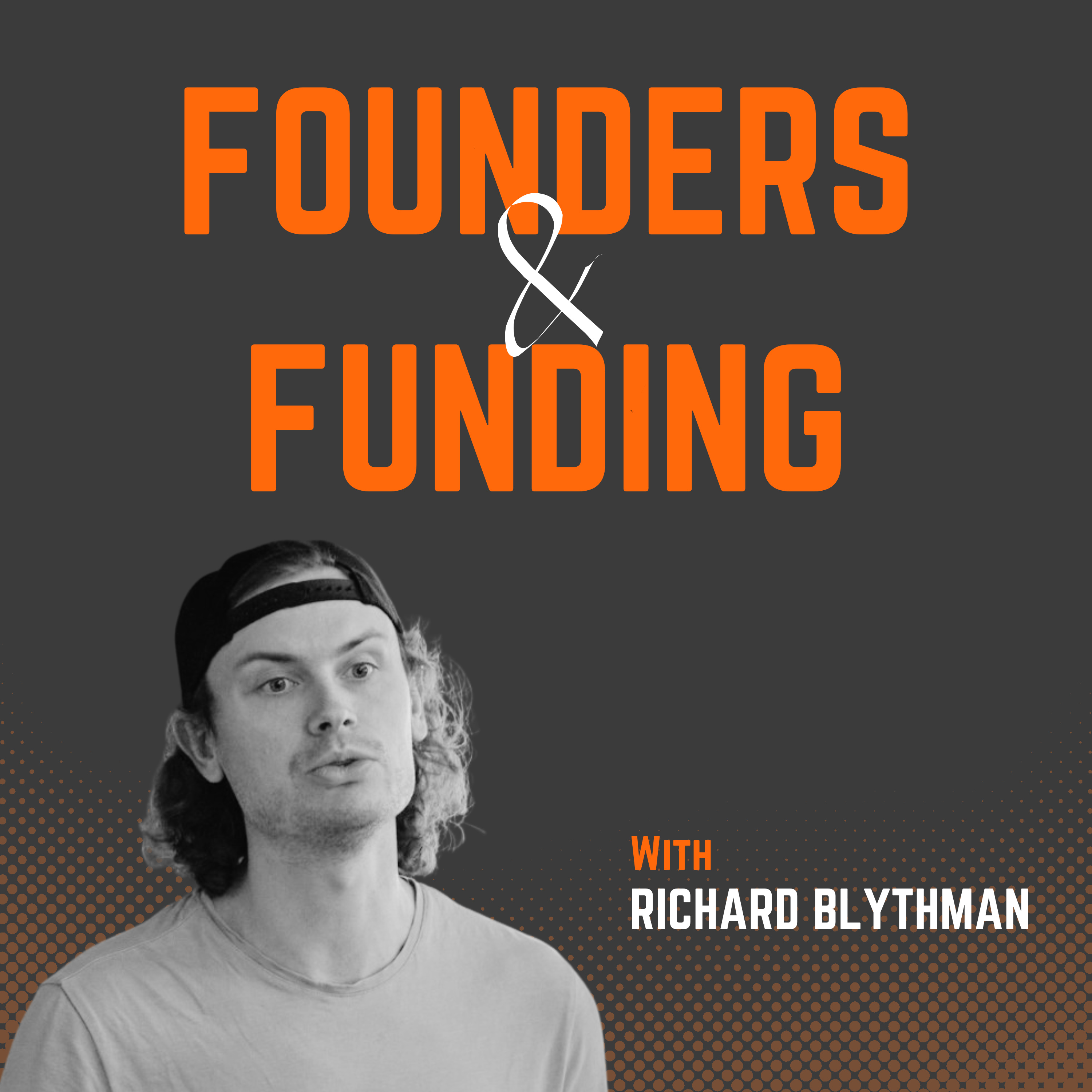
In this episode of the Founders & Funding Podcast, Philip Smith speaks with Richard Blythman, Founder & CEO of Naptha AI.
Richard shares his journey building Naptha AI, from predicting the rise of AI agents before MCP was even mainstream, to the hard lessons of fundraising, pivoting, and finding product-market fit in one of the fastest-moving spaces in tech. They discuss what it really takes to build in AI, why the old rules of startups are changing fast, and how founders need to think differently to stay relevant.
0:01 Hi, welcome to the Founders and Funding podcast. I'm your host, Philip Smith. On the podcast, I'll be interviewing founders, investors, startup advisors on how to fund the journey of your startup and some tips and advice they have for you along the way. This podcast is sponsored by Perfect Technologies and Laden. Enjoy the episode. Richard, welcome to the Founders and Funding podcast. Thank you so much. It's great to be here. Well, it's, it's my pleasure to have you on. To be honest, uh, Richard, to shut us off, just tell me about your company and your role. Yes, I'm, I'm Richard, I'm the CEO and founder of Napa AI. We are an AI company and we fundraised, uh, almost two years ago now on this vision that we had for the Internet of agents. And bear in mind, this was about a year before MCP was released by Anthropic.
0:55 So we, we had something similar to them, which was like an MCP platform. We thought, you know, there were going to be tons of these agents running on different servers, on different devices or cooperating across the network and as part of organizations. That's really interesting. That's that that actually seems it's not, you know, in terms of actual life, it's not a very long time ago, but it seems like a kind of an eternity, a goal from this world of AI. You know, thinking of everything that happened in the last two years between charge of G and Claude and all the developments and releases and changes and new companies, it's, it seems like such a long time ago. Yeah, yeah, it really does. Like everything changes so fast. It's been, it's been a whirlwind of two years and I don't think it's slowing down anytime soon.
1:40 Yeah, I both love and hate it's, it's really good to use the tools, but it's also very frustrating trying to keep up with, you know, every time I kind of master 1 to get used to it, then something else releases and that's better and you have to change over here. But you know, that's part of the journey, I suppose. Yeah, yeah, exactly. And it's a lot of fun. It's exhausting at the same time. Yeah, I can imagine. And and what does an average day look like right now? So at the moment we're, we're just starting to move into sales mode. I guess previously we were doing a lot of problem discovery, which looked more like, you know, user research, a lot of user interviews, that sort of thing. Because we hadn't, you know, found a problem that was, you know, a priority for people to solve. And then after that, once we'd found a problem, we started doing product discovery to, to figure out solutions and, you know, doing tests with users and that sort of thing. And neither the problem nor the solution or the, the bottleneck anymore.
2:35 And so about 3 weeks ago, we actually just started running sales prints week by week where, you know, we change our hypothesis somewhat. The ICP is like the person that, you know, we want to sell to what the, what the price is, what we're actually selling them, what the value we're providing is. And we try to talk to or make you know about 10 different pictures each week and then refine the hypothesis until we start closing deals. That's really interesting. I think I'm always, whenever you're a founder talking about, you know, they're focusing on sales, I always think that's a company that's moving in the right direction, but also innovating. Because I think if you're focusing on sales, you're, you're trying to make the product better for the sales, you're trying to focus on growth and innovation.
3:16 So I, I think it's always the, it's refreshing. I think the probably the best area to focus on. Yeah. I think, like, I don't know if this is useful, but one of the previous mistakes that I made was trying to run sales with something that wasn't really solving a top priority problem. So we've always broadly been building on top of this like similar infrastructure, which is like the Internet of agents, agents running everywhere, MCP platforms, all that sort of stuff. Yeah. But we've been trying to figure out like use cases for that for the last year or so. And one of the previous areas that we wanted to apply this to was for like developer on boarding. We're trying to sell to developer tool companies and use our technology like agents to help users on board and, you know, get customer support and all that sort of stuff.
4:03 And actually like the mistake that we made there was we, we kind of like started off with a solution and then tried to work backwards to a problem. And then we spent, you know, months and months trying to sell this and close design partners and we really just couldn't get across the line. And my, my conclusion about what happened was that we didn't do the problem discovery and the product discovery well enough before and we moved into sales mode too soon. And so that's actually a big change of what we did this time. We, we did extensive problem discovery, solution discovery. And now just coming into that sales cycle, it's already clear that there's a lot less friction than than what we had before. You know, we're going through vendor approval with some companies and that sort of thing. So yeah, I think doing sales at the right time with the right problem and the right products is, uh, is the hard part almost.
4:51 Yeah, I think, and this probably sounds strange to some people, but I think when you're actually just busy and the calls are being booked and you're doing the sales calls and you're closing deals and you're like, and, and maybe they're 12 hour days, maybe they're long tough days. But it it, to me anyway, my experience, it feels lighter than, you know, kind of when you're trying to find the product market fate, you're trying to find the problem, you're trying to find the solution that for me, my own experience caused a lot of sleepless nights because, you know, there's an assurance at least when you're busy, that you're moving in the right direction and it's clicking where, you know, when it's not quite clicking, there's a stress of how can we make this work? So yeah, I've been there. Yeah, yeah, I'm still in that kind of complex maze trying to navigate us. Maybe there's a little bit more life that I can see than before. I think we're making progress, but I I know exactly what you mean.
5:38 Well, I think I'll, I think to be fair with an update, I think it already looks so impressive. And you know, I think that's the, that's the great thing. I think it's, it's kind of the, for me, the kind of the pro and the con of the, of, of AI that you can, you can, you can create something that's so incredible and impressive. But as you said, it is, it's trying to find the big enough problem for that that people actually want to stick around, use it over and over again and spend the time learning how to use it to give them feedback to improve it. And I think AI is kind of, it's both helped and hindered that because AI can do so much. But then it's like what we actually get the AI to do, you know? Yeah, for sure. Umm, the, the, it's like it's, it's so competitive, the space at the moment. I, I mean, there's a lot of different ways that you can approach, you know, figuring out what to build. I guess I'm like, one thing that you see a lot happening is people will focus on a particular domain, whether that's like construction or even like, you know, plumbing or Craftsman or, or something like that. And then start building an AI solution to help these people in their like day-to-day jobs.
6:41 And that's actually like something that is, is quite successful. I guess like one thing that we learned from, you know, being more towards like the infrastructure side and dev tool side is that, you know, when you're building something more horizontal than vertical, it's like super competitive. And I guess that's a learning that we've we've made over time and like everything just moves crazy fast, like we were saying as well. And also, are you competing with Anthropic and open AI? And so a lot of figuring a lot of this stuff out is a is a huge part of the battle in my opinion. Yeah, I know. I completely agree. Like I, and I don't think that's been talked about enough, you know, really about AI because it's for startups. It's just, there's just, there's such an endless, umm, change in AI, but also in the kind of different niches that have been created and, and the kind of what those companies could look like. And they try not to compete with the likes of, you know, Tropic or open AI, but also trying to create your own, uh, space and niche that that works to, to, to look more closely at the company's, uh, journey.
7:46 How has it funded it? It's a journey to date. Yeah, so my life journey in, in fundraising has been relatively long. 1, I actually, when I came out of college, when I finished my PhD in 2017, I started looking for, for start up funding straight away. And the first thing I knew was I, I just come from academia. So I actually tried to use that Ave. that I, that I knew initially. And so went more after like commercialization funding, which you know, means that you need to move into the university to, you know, research and develop the, the technology there. Yeah, that was just such a slow process. It took, we were 18 months in and we got rejected for like the third or fourth time by the review panel, all of whom have to say yes. And it was at that point I thought there just has to be a faster way than this.
8:32 That funding actually came in after two years. We, we were trying to bring in 300K, but by that time I was sort of handing off to someone else. And that, that startups actually still going, they're still, they're in the process of spinning out from the, the university and fundraising. Last time I heard they're called Kinema. So that was kind of my first, my first lesson in fundraising, I guess you could say. And then I started a new startup that was called Algevera. And we were trying to bootstrap the idea there was we would spend about half of our time bootstrapping, you know, doing consultancy for different organizations and the other half trying to, to fundraise. And the sort of consultancy work that we did was building out AI workflows, a lot of like LLM workflows and that sort of stuff like Lang chain had just come out. We were building a lot of these solutions for, for different companies.
9:24 And so we managed to grow the team to about 6 people fully bootstrapped. But I think the, it was, it was a distraction in terms of fundraising and we never actually managed to, to fundraise based on that. We had maybe like 2-2 different attempts. I was also like quite an experienced at fundraising at that time and made a lot of mistakes, like, you know, kept the round up for six months and didn't make enough of a campaign and all this sort of stuff. But then my Co founder left, who was, he was Irish and he just, you know, he, he wanted to go off and do other things. And I ended up starting a new company, which was NAFTA AI. And you know, two months later Cha Chi BT came out. So there was a lot of interest in the in the AI space and I've been building these, these LLM work flows for, for quite a while.
10:14 And so we managed to capitalize on, on that interest and raise 6,000,000, which was about about two years ago. And we raised that from from international investors as well. So yeah, what's the best route? I don't really know. I guess like what I would say is there is too much of A tendency to go towards Enterprise Ireland in the Irish ecosystem. And I see really early signs of that starting to change. And I think that's for the best. And like a community that I'm really excited about at the moment is the baseline community. Oh, I know. Baseline, yeah. Yeah, they're they're awesome. I'm like I I might get some of the details wrong here, but as far as I know, it's like one of the first non government backed kind of like startup communities or organizations, you know, and I think that's that's really important because the government have like different incentives for building companies rice like they want to increase employment and number of jobs, all this sort of stuff, right, which isn't necessarily the same as what you want if you're a if you're a startup vendor.
11:14 So I think it's great to have government's funding for startups, but I think it's also great to have, you know, independent communities and funding ecosystems for startups. And that's one that is just starting to grow and Ireland. And if I was starting from scratch again, I think that would probably be the first place that I went. I know Eamon, you know, Eamonn and Fiona raised their first fund of about 5 million and they're putting first tracks into startups. And yeah, that's a really, really good option at the moment. Yeah, I saw that. I think based on they're doing really good work, I think it's. Yeah, I think it's, it's a really good point you've made there. It, it's like it, it is great, you know, to have the local enterprise offices and Enterprise Ireland and and everything there. But like the RE, there are both pros but also cons to it. I think, I know, I know a lot of founders that have kind of, they focus so much on trying to, you know, maybe do, they'll do like New Frontiers the first six weeks and then they'll move to phase two where they spend maybe months applying for these different things or for the HPSC or these different grants and mechanisms.
12:20 And they kind of stop working on this start up a little bit because they're, they're kind of waiting for these grants or the, the, this finance. So I think it can kind of slow you down, you know, too much if you kind of pin all your hopes on it and it's not guaranteed. And, and there's also, you know, there are, uh, there are certainly pros, but the role are also cons and it doesn't, it doesn't suit, I think every startup or every founder. Umm, I think the journey you described is, uh, is one that Ireland certainly needs as well to at least have the option of, umm, if we, if we look at the founding team themselves a bit, Richard, and you know, and this is kind of a broad question, but what are the best skills new founders should possess? Or what do you think is helping founders to, umm, separate themselves or be successful in this startup right now? Yeah, I think maybe something that's changing the most is the like how dynamic the situation is. And even like when you look at the the biggest tech companies, a lot of them are doing these massive pivots, right and these massive bets changes of direction. You know, some of the examples here are like intercom, for example, who like, you know, pivoted head first into AI agents and are one of the fastest growing companies. And then there's other examples like air, air table as well. Like they did a pretty big, big pivot. And I don't think I've ever seen that before in tech as much as that how quickly all of these big companies are moving, right. And it's no longer this like,
13:51 you know, cliche of the, the slow moving big company and the quick moving start up that can move faster. Like it's a the the big companies are moving much faster than they did before. So I think it's it's harder to disrupt in a sense. I think like one of the lessons that I learned was like the importance of pivoting, I guess. And I guess in general, there's 22 schools of thought with, you know, the approach that founders can take. There is maybe what you could call the the Peter Thiel zero to 1, which is like, you have this big vision and you don't need to talk to customers because like, they won't tell you the right things anyway and they won't be able to talk about their problem. So just build your vision, unlike, you know, just build that for 10 years and like change the world. That's kind of maybe the more common view of what founders should be.
14:39 At least that was the one that I subscribe to most. Yeah. And then there's also like the YC model, which is much more, you know, sometimes YC companies pivot like 3 or 4 times like in the space of whatever the 12 week program. And I think I started much more in the first one and I've been gradually moving much more into the second one over time. And you know, like I said, we fundraise on a vision and it was great for fundraising and we predicted a lot of stuff, right? But after we fundraised, like we built in, we built in stealth for a year and weren't, you know, user focused enough. We weren't talking to users enough. We weren't responding to enough.
15:21 And you know, ultimately by the time we launched, then MCP had come out by Entropic and we, you know, needed to scramble to adopt that because it was getting traction and we kind of missed the wave. We didn't catch PMF based on that despite predicting a lot of the the technology, right? And like my learning as a founder since then has been how to pivot, how to like experiment and iterate and learn from users and respond to the market more and more. And I've even heard people say in these big tech companies that there's a few good blog posts where they talk about PMF used to be this just milestone that you reached. It's like you're pre PMF and then you're after PMF and before PMF. It's like innovation.
16:06 And then after PMF, it's all about optimization. You can let go of all of your inventors and just let the business people in and like optimize the revenue and all this sort of stuff. But I think that's changing even the in these big tech companies and people are now talking about the need to like reinvent yourself every six months. I think I listen to it's, it's one of the people from Lovable, they said, you know, you have to reinvent, you have to refine PMF every six months. And people are calling it the PMF treadmill now. And it's a much more continuous thing where you need to be continuously finding PMF, launching new products. And it's less about optimization and it's more constantly about innovation now. So I think like if I could go back and tell myself one thing, it would be get more comfortable in dynamic situations with iterating and like tuning the direction and even like pivoting with like relatively large changes.
16:55 Because I think that's becoming much more important in this dynamic world where the tech changes every week, the market changes so quickly, the competitors change so quickly. I think that's probably one of the most important skills you could have as a vendor right now. Yeah, that's that's made me it's given me a lot to think about. It's, but it's, it's, it's so true. Like I think as you like so many companies do, they just, they look for the product market fit that the, the sales start, start to convert at a better rate to see a bit more and they kind of just stay there. And they do often stop innovating. And that's why there's so many applications out there that you just don't see much changes in their features or their positioning or, or what they're doing. Umm, and they do slowly just get stale or, you know, things under the market that are cheaper and easier and AI is just add into all of this.
17:43 So it's, umm, I, I think keeping innovation alive is, uh, and even for, as you mentioned, like lovable, you know, you constantly see lovable and these other umm, kind of more innovative companies, they're hiring umm, founders, you know, they're looking for, for people that have that found a mindset who are innovative to keep the company changing and innovating all the time. Umm, so I think that's, uh, that's going to serve them really well and intercom as well. It's such a good example of it launching fin. You know that's that's going to be a perfect, a perfect example of the whole thing there. Yeah, 100%. I think it's a more difficult time for optimizers and like you want to hire more kind of innovators and inventors. And I think that happens in every role in a company. I even heard in it was another podcast, but someone was there like they were working in GTM and they said that for GTM, it used to be like 80% of the job was, was optimizing existing GTM channels and maybe like 20%, uh, innovation in new channels. And apparently that's completely switched now where it's like 80% GTM innovation and like 20% optimization. So the people who like optimize the funnel are less needed now. And the people who just come up with, I don't know, a whole new product line to onboard users, umm, or like some, uh, some other GTM innovation is, is much more important. Yeah, Yeah.
18:59 I can set up 100%. And to turn back to the kind of investor angle a bit, how do you think companies can attract investors effectively or how does it work for Naptha AI? It's a good question. I think, yeah, I think like vision, vision is still really important. I think that also it's easier to build things than ever and you can you can get much further along just using like AI tooling and maybe it's more important now to have that like prototype or even, you know, closing that first design partner. So I think, you know, whatever you can build and demonstrate yourself and show proof that you know, you're going to be a founder. I think that's that's becoming more important as well. I think, you know, I think another big thing that's happening in the investor landscape, I guess from an Irish perspective is that things are opening more internationally and it ties in what we talked about with with Enterprise Ireland. But it used to be the case that, you know, you would raise from Irish feces, but now I see a lot more founders, you know, raising like European wide or even like internationally. So I think that's that's another consideration for fundraising as well.
20:15 It's really difficult out there and especially from a defensibility standpoint, you know, like the sorts of questions you get now or well, what's going to stop Anthropic from building this and that's. Yes, yes. I guess, umm, I, yeah, I think it's a really challenging environment to, to fundraise right now. I agree. I think like the good news is there's there's more options, you know, and just to look at Ireland for a moment, like baseline there. And but there is also a heck of a lot more as startups and founders and people innovation and the barriers to entry is just lower now because you have VI that can help get you started. So yeah, it's a, it's a change in the world. I think that's another really good way to, you know, meet investors, like in baseline, for example, they often hold, you know, VC dinners and like VCs are sometimes working from the space they come over from the UK or even further afield. And so like that sort of relationship building with investors and being part of this community that builds this network of trust, I think is is really, really helpful. Yeah, 100%.
21:22 It's just, it's just relationships really. I think the better you can just create natural relationships where you actually feel like, you know, you're both engaging and care whether the person thinks and says. And, uh, you know, I think that that's, I think that's always a great way to try to, to get people to believe in what you're doing. And if, if you finish up, uh, Richard, if you had one key piece of advice to share and fund in a startup, what would it be? One key piece of advice to share on funding a start up, I guess I've covered a lot of the, the themes that I would say like 1 is luck, at least explore options other than Enterprise Ireland, like explore what it looks like with Enterprise Ireland, but also know your, your alternatives.
22:08 I think don't just look at the Irish fundraising markets. I think look more broadly across Europe and the US as well. You know, it's easier than ever to to raise fundraise internationally like the world is really connected. Investors canmore easily invest across all markets. So I think knowing your options there is really helpful. And yeah, I think that's that's probably the main thing that I would say if they asked if someone asked me. Yeah, I think, I think it's, I think it's both really good advice, but also important to remember, I think I think we can always get kind of a, well, a bit guilty of just looking at what's around us rather than trying to look a bit further afield and having a bit of imagination when it was possible. And Richard, thanks so much for calling the podcast. That was a really, really good conversation and you've given me a lot to think about.
23:01 Yeah, you're very welcome. I think it's a really exciting time to be in startups. And, you know, I think going forwards, Ireland is going to build this bigger startup ecosystem, especially, you know, maybe the the big tech side of things is going to be less dependable. So I think that's a really exciting time for startups and the startup community in Ireland is just getting better and better. So yeah, it's challenging, but also a lot of fun and it's it's growing. Yeah, I agree. Richard, thanks so much. OK. Thank you. Hi, thanks for listening to this weeks episode of the Founders and Funding podcast. If you'd like to be a guest to have a guest suggestion, please get in touch.
23:44 Thank you.